
Posted on Leave a comment

Equestrian: 3 Bit Tips

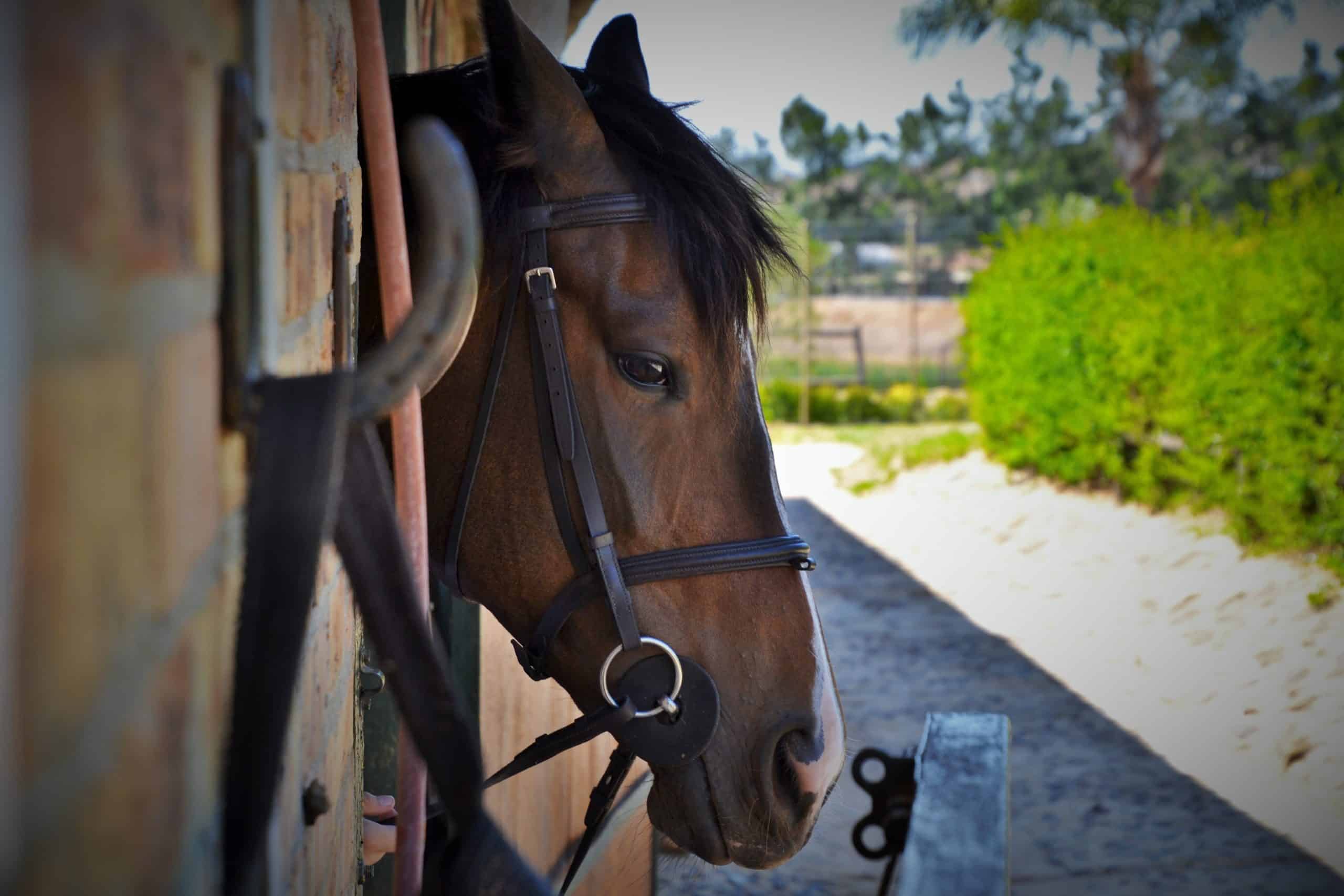
Any horse rider knows, it can be a nightmare to choose just the right bit for your horse. As a rider and owner, I’ve more than once found myself in front of the bit rack at the tack shop, both mesmerized and paralyzed by the choice.

I found two articles to help demystify the bit question. The first article How Horse Bits Work and Basic Rider Uses published by Horses and Horse Information discussed the different actions the bit has in the horse’s mouth and debunks the myth that to control “a big animal, one needs a strong bit.” The principle is that correctly fitting bit and bridle will create pressure from which the horse will move away.

In the second article Understanding Bits by Stan Walchuk Jr., the author suggests putting bits in two categories: snaffle and curb. The snaffle bit has no shanks or levers. The article also discusses the raised ports to relieve tongue pressure and apply pressure on the roof of the mouth and gives examples of the different types of bits. It further discusses the correlation between bit severity and training, by stating that severe bits should not be used with green horses or inexperienced riders.

Bit checklist

After reading these two articles and my experience, here are three things you should consider when looking for a new bit for your horse.

  1. Width—Measure your horse and buy the appropriately sized bit.
  2. Shape—Consider the shape of the bit and your horse’s mouth to reduce or add pressure.
  3. Leverage—Look at how much pressure the bit exerts in the horse’s mouth.

To conclude, you now know the bit basics before deciding to change or buy a bit. Happy shopping!

My name is Chloe. I’m a passionate equestrian, horse lover and hobby farm owner with three horses in my care. I’ve been riding (on and off) since the tender age of 6 and love to discuss anything horse-related. Feel free to connect with me at @eqnextdoor on Twitter or Equestrian Next Door on Facebook.


Posted on 3 Comments

Review: Recognizing and Developing Healthy Hooves by Metta Equus

Disclosure: I did not receive any compensation for this review and paid full price for the clinic. Below is my honest, unbiased review.

I’ve had a keen interest in hooves since purchasing Alice, who had very “thrushy” hooves when she came to me. Who hasn’t heard of the adage “No hoof, no horse?”

This weekend, I had the opportunity to attend the Level 1 Recognizing and Developing Healthy Hooves given by Metta Equus.

Initially, I thought this clinic was all about trimming hooves. After taking a look at the description, I realized that this was the first crucial step toward understanding hooves before getting anywhere near a hoof. We covered hoof anatomy, criteria of a healthy hoof, common hoof issues, factors that impact hoof health, alternative hoof protection and, of course, much more! Toward the end, we got to stretch our legs and watch a trim demonstration. I know this particular hoof practitioner, so it was a special treat for her to walk us through her process.

Who Is Metta Equus?

Metta Equus is a company started by two Quebec Hoof Care Practitioners and businesswomen, Maia Chaput and Catherine Larose. Both are highly respected in our community for their barefoot trimming and ability to rehabilitate horses which nasty foot issues.

The Clinic

The clinic was held at a local venue. There were about 20 equestrians that attended from all walks of life: some owning horses at home, some competing, some having bought OTTB, some prospective buyers and some were even other horse care providers. The mix of experience in the room led to diverse questions and discussions. It was a great group and the dynamic in the room was conducive to learning.

Overall

I loved the clinic and I look forward to level 2 in a few weeks. I walked away from the day with more action items than I expected. Maia and Catherine were generous with their knowledge and experience as well as patient when explaining the nuances of hoof care. What a passionate team!

Pros:

  • Well documented and presented material.
  • Many different models, visual aids, and examples, such as healthy coffin bones vs. unhealthy ones.
  • Pictures and videos are of cases the clinicians have personally worked on, so they were able to share the history of each case and how the horse was doing now.

Cons:

  • Although the venue was well equipped with a fridge, coffee maker, and facilities, more tables and potentially better heating would have added to the audience’s comfort.
  • Breaks and lunch could have been better spaced out throughout the day.

Take Aways

  • The first thing that was clear throughout the clinic is: despite the lack of absolutes in hoof care, there are different options!
  • Secondly, although these two aren’t farriers in the traditional sense of hammering in steel shoes, they do believe in hoof protection. With today’s advancements in materials and understanding of the hoof, they prefer to explore alternatives to age-old traditions.
  • Nutrition, nutrition, and nutrition. What you feed your horse has a direct impact on their health and in turn their hooves.
  • The difference between a normal hoof and a commonly seen hoof is astounding. This was a light bulb moment for me. The hooves you see everywhere aren’t necessarily healthy examples!
  •  

At the end of the day, not a single person left that room indifferent. And more than a few of us after the clinic went directly to the barn to inspect our horse’s hooves with a more critical eye.

I’ve signed up for the Level 2 Clinic, so I’ll have even more to share in a few weeks.


Posted on Leave a comment

Plan for the worst. Hope for the best

ICON_PLACEHOLDEREstimated reading time: 2 minutes

Anyone who keeps horses knows that nearly everything is about managing risk when it comes down to keeping these animals safe and sound. Food, water, and shelter – the basics – are typically at the core of it. And then there are food supplements, hoof care, dentistry, tack fit, fitness level, herd dynamics, turn out and turn in and much, much more to consider. You know what they say: Plan for the worst and hope for the best.

And then, there are external factors. Things thoroughly out of your control, such as falling leaves, random noises, and fireworks.

Fireworks and horses

I remember as a child, my dad would bring me to watch the weekly fireworks during the summer. I would usually enjoy them, right up to falling asleep halfway through.

Today is a different story. When I hear fireworks go off, I run to the windows facing the paddock and peer out, praying to the horse deities that my horses aren’t freaking out. I’m lucky that so far they don’t seem to care either way, but, after recently welcoming a new member into the herd, I wasn’t sure what would happen with fireworks going off.

a person standing in the snow watching fireworks

Thankfully the last time we had to contend with fireworks, a prominent member of the community was kind enough to warn dog owners of the upcoming fireworks and thus warned the large horse community as well. I made arrangements to bring the horses in and felt better for it and then went to ride my horse at another barn.

All that planning and then…

Well, wouldn’t you know that those plans fell through entirely due to babies waking up at the wrong time? So my husband ended up peering anxiously through that same window and found two non-hysterical horses in the paddock, watching the light show.

This all goes to show you that despite careful planning, sometimes things go awry. And despite careful planning, sometimes you just don’t need it. So much energy into something that thankfully didn’t happen.

What do they say? Plan for the worst and hope for the best? I guess that was my motto today!

Have you ever planned for something only to have everything go wrong anyway?