
Posted on 9 Comments

Hoof Trimming Practicum

Originally published on April 19, 2019

Estimated reading time: 3 minutes

My back hurts, but that’s a good thing! Today I put into practice what I learned from the hoof clinics from Metta Equus. If you missed my reviews of the two first levels, here are Level 1 and Level 2. For my hoof trimming practicum, I chose to trim my husband’s gelding Obélix because he has great feet and is really patient.

Before we trim

My teacher for the day, Maia started by running through what she usually looks at when she trims a horse for the first time. We discussed the list and took the time to thoroughly look him over for any oddities.

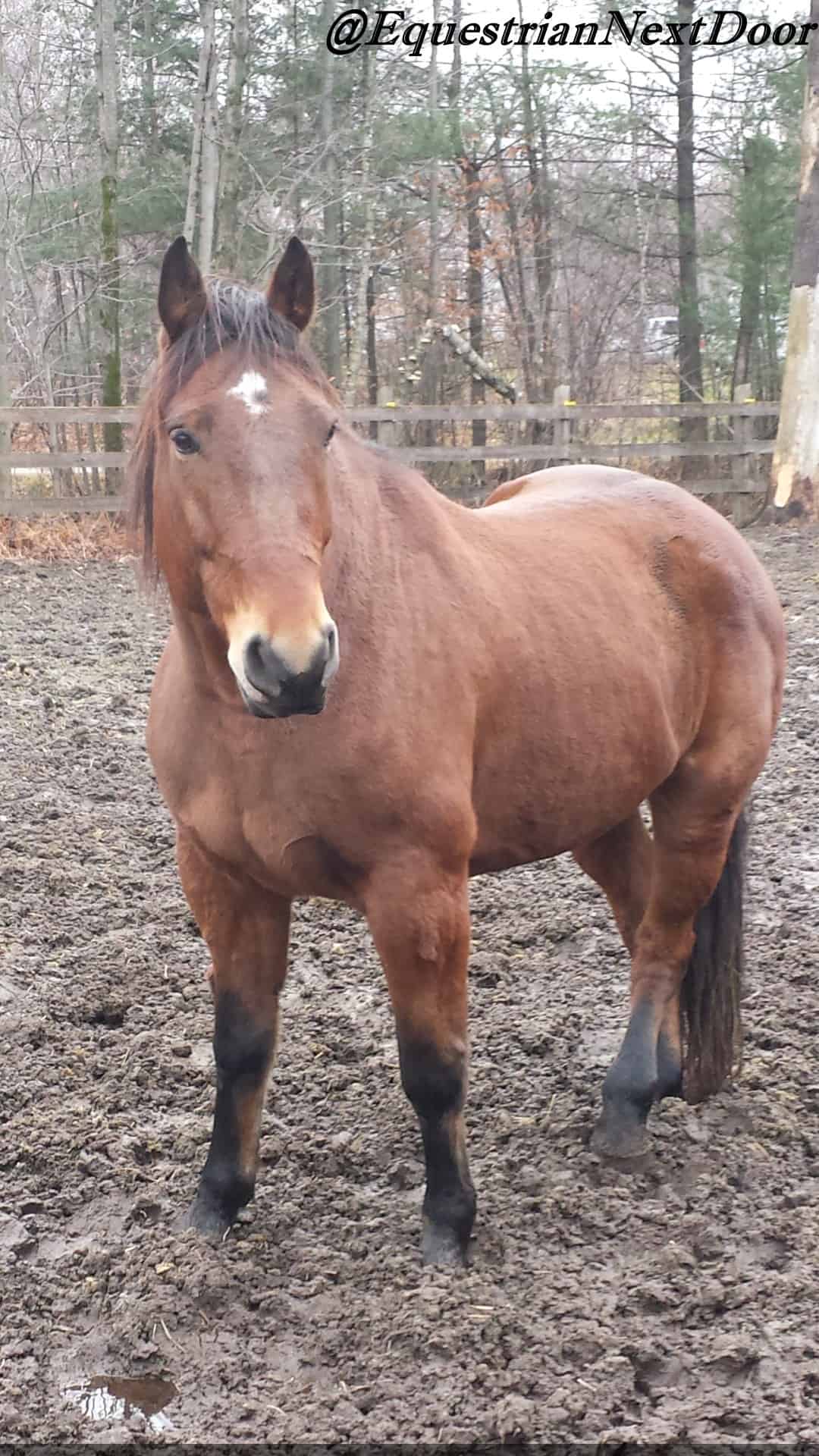
During the exam, we noticed that his chest and shoulder muscles were overdeveloped on the left side (the right side of the images below). He is returning to work slowly, but it is something we would keep in mind while trimming his hooves. Not to mention that, for the moment, this horse cannot pick up the right lead at a canter. We are working on it though, but it was interesting to pick up a few more pieces of that puzzle. He also holds his tail to the right side.

The plan was for me to trim two feet, one fore and one hind, and for Maia to do the same on the other side. I had a great time discussing Obélix’s hooves with such a knowledgeable and patient teacher. Maia suggested I start trimming with a rasp and avoid the nippers so that I was less likely to take off too much. We did a conservative trim and discussed the different parts of the hoof and how he was using his feet. It was interesting to note that despite his apparent crookedness, he is wearing his hooves evenly.

In the end, we felt confident that I could trim Obe’s hooves alone in three weeks and that Maia would take a look when she was in the barn next.

Next Steps

I also have takeaways now that I have taken a closer look at my hubby horse. He had a previous shoulder injury and a bone chip floating around in there, so it isn’t surprising that the opposite shoulder compensated and thus muscled differently! Now I will investigate how to muscle him correctly and gently to help him feel better in his body.

And I’ll be trimming him in a few weeks!

Practicum Review

This practicum and many more trims with Maia’s guidance complete the Hoof Clinic series from Metta Equus. I cannot thank Maia and Catherine enough for their patience and time. They are excellent teachers who are patient and eager to share their knowledge. During this practicum, I was able to put to use the knowledge in Level 1 and Level 2 and gain a true appreciation for their work. If you are interested in attending one of their clinics, check out their website.


Posted on 3 Comments

Review: Recognizing and Developing Healthy Hooves by Metta Equus

Disclosure: I did not receive any compensation for this review and paid full price for the clinic. Below is my honest, unbiased review.

I’ve had a keen interest in hooves since purchasing Alice, who had very “thrushy” hooves when she came to me. Who hasn’t heard of the adage “No hoof, no horse?”

This weekend, I had the opportunity to attend the Level 1 Recognizing and Developing Healthy Hooves given by Metta Equus.

Initially, I thought this clinic was all about trimming hooves. After taking a look at the description, I realized that this was the first crucial step toward understanding hooves before getting anywhere near a hoof. We covered hoof anatomy, criteria of a healthy hoof, common hoof issues, factors that impact hoof health, alternative hoof protection and, of course, much more! Toward the end, we got to stretch our legs and watch a trim demonstration. I know this particular hoof practitioner, so it was a special treat for her to walk us through her process.

Who Is Metta Equus?

Metta Equus is a company started by two Quebec Hoof Care Practitioners and businesswomen, Maia Chaput and Catherine Larose. Both are highly respected in our community for their barefoot trimming and ability to rehabilitate horses which nasty foot issues.

The Clinic

The clinic was held at a local venue. There were about 20 equestrians that attended from all walks of life: some owning horses at home, some competing, some having bought OTTB, some prospective buyers and some were even other horse care providers. The mix of experience in the room led to diverse questions and discussions. It was a great group and the dynamic in the room was conducive to learning.

Overall

I loved the clinic and I look forward to level 2 in a few weeks. I walked away from the day with more action items than I expected. Maia and Catherine were generous with their knowledge and experience as well as patient when explaining the nuances of hoof care. What a passionate team!

Pros:

  • Well documented and presented material.
  • Many different models, visual aids, and examples, such as healthy coffin bones vs. unhealthy ones.
  • Pictures and videos are of cases the clinicians have personally worked on, so they were able to share the history of each case and how the horse was doing now.

Cons:

  • Although the venue was well equipped with a fridge, coffee maker, and facilities, more tables and potentially better heating would have added to the audience’s comfort.
  • Breaks and lunch could have been better spaced out throughout the day.

Take Aways

  • The first thing that was clear throughout the clinic is: despite the lack of absolutes in hoof care, there are different options!
  • Secondly, although these two aren’t farriers in the traditional sense of hammering in steel shoes, they do believe in hoof protection. With today’s advancements in materials and understanding of the hoof, they prefer to explore alternatives to age-old traditions.
  • Nutrition, nutrition, and nutrition. What you feed your horse has a direct impact on their health and in turn their hooves.
  • The difference between a normal hoof and a commonly seen hoof is astounding. This was a light bulb moment for me. The hooves you see everywhere aren’t necessarily healthy examples!
  •  

At the end of the day, not a single person left that room indifferent. And more than a few of us after the clinic went directly to the barn to inspect our horse’s hooves with a more critical eye.

I’ve signed up for the Level 2 Clinic, so I’ll have even more to share in a few weeks.