
Posted on Leave a comment

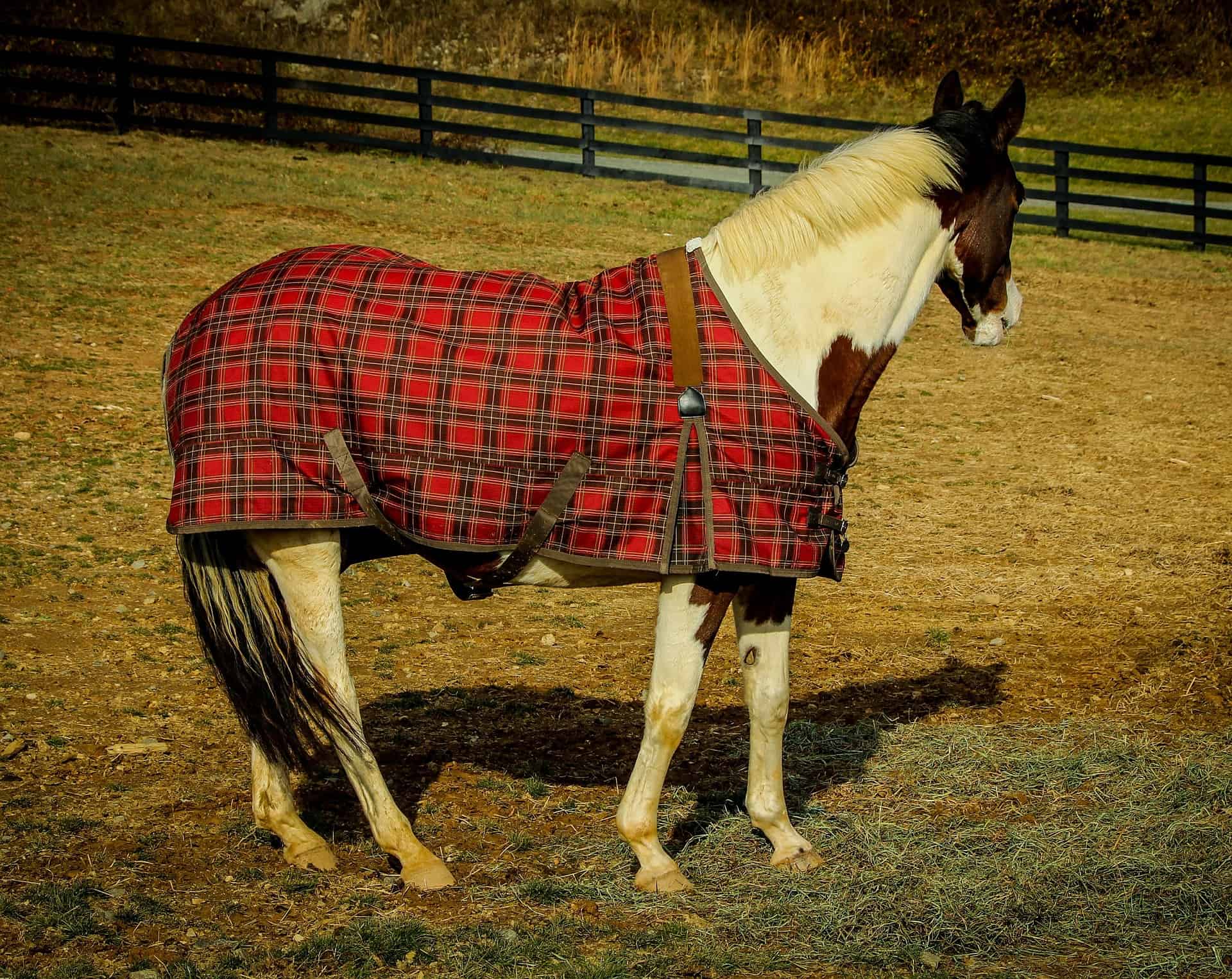
3 items to check before blanketing your horse

As an equestrian, it is so hard to know when to blanket your horse during the winter. As a hobby farm owner with her horses at home, I found two articles describing what you need to look at as you decide to blanket or not.

The first article Should I Blanket My Horse In The Winter? by Dr. Lisa Nesson published on IronGate Equine Clinic made recommendations based on hair coat, types of blankets and their fit as well as the basic requirements for roughage, water, and shelter. She talks about the hair coat’s abilities to withstand cold weather without a blanket, which allows the hairs to trap insulating air to keep the horse warm. She even included an infographic to help readers decide when to blanket.
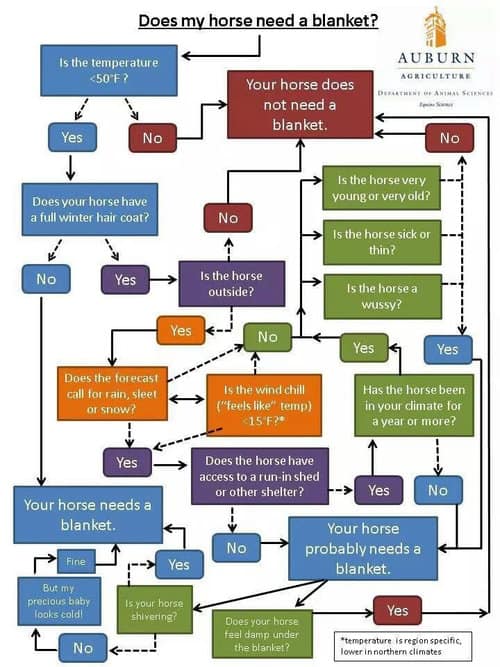
Does my horse need a blanket? Decision chart.
Inforgraphic from Auburn Infographic

The second article published by the Feed Room, When to Blanket a Horse: Ask the Expert, Marcia Hathaway, Ph.D., answers this question by setting out some keep points about shelter and weather conditions, as well as age and body score. She mentions that horses continue to grow their winter coat until December 22 and start to lose it as the days start to get longer near the summer solstice.

Horse Blanketing Checklist

Based on these two articles and my experience as a horse owner, I have listed three things you need to check before deciding to blanket your horse:

  • Examine coat condition – If your horse has a thin coat, put a blanket on.
  • Check age and health – If your horse is very young, very old or has underlying health conditions, put a blanket on.
  • Evaluate body condition – If your horse’s body condition is less than a 3 on 9, put a blanket on.

Now you know what to consider before blanketing your horse.

My name is Chloe. I’m a passionate equestrian, horse lover and hobby farm owner with three horses in my care. I’ve been riding (on and off) since the tender age of 6 and love to discuss anything horse-related. Feel free to connect with me at @eqnextdoor on Twitter or Equestrian Next Door on Facebook.
Posted on Leave a comment

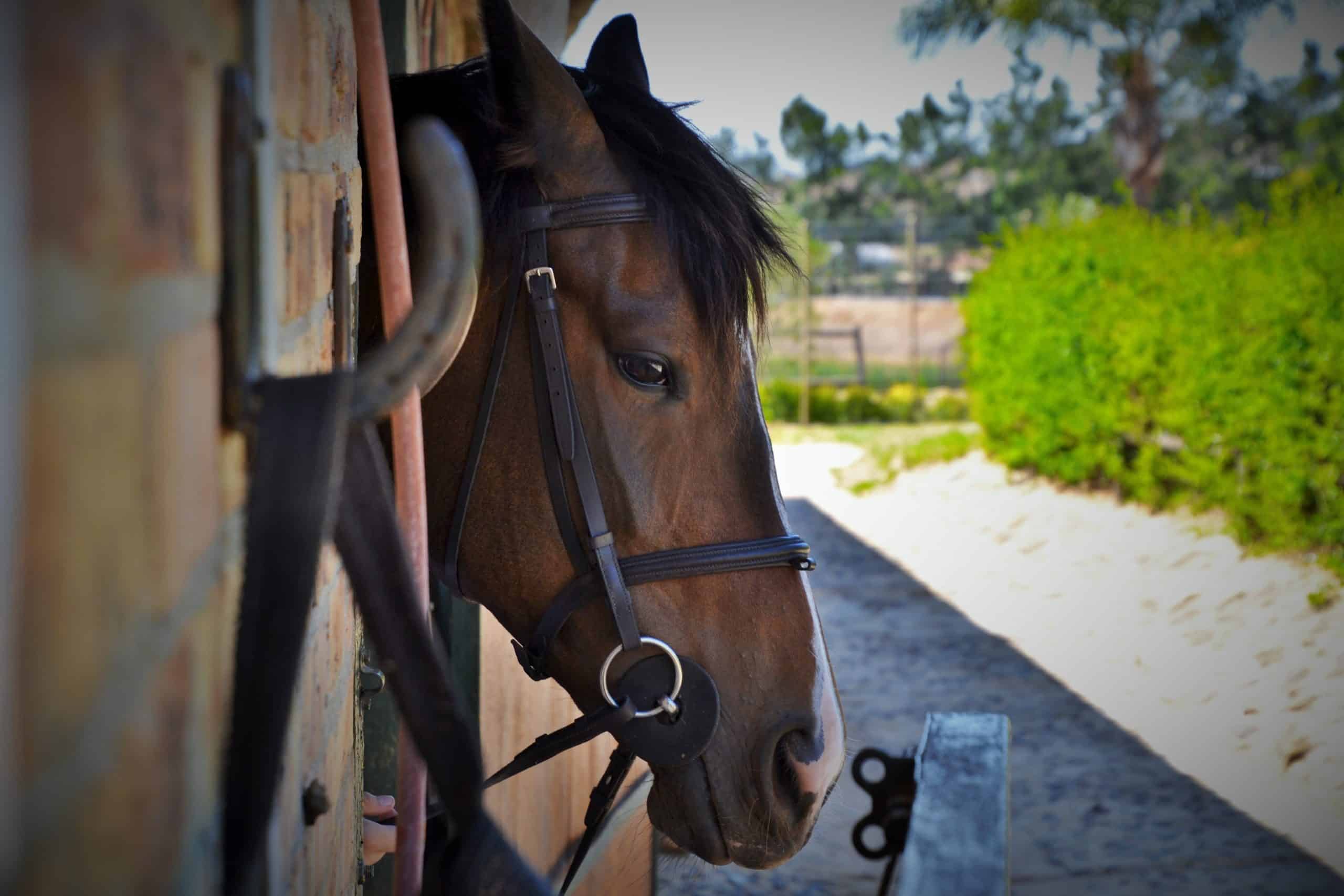
Equestrian: 3 Bit Tips

Any horse rider knows, it can be a nightmare to choose just the right bit for your horse. As a rider and owner, I’ve more than once found myself in front of the bit rack at the tack shop, both mesmerized and paralyzed by the choice.

I found two articles to help demystify the bit question. The first article How Horse Bits Work and Basic Rider Uses published by Horses and Horse Information discussed the different actions the bit has in the horse’s mouth and debunks the myth that to control “a big animal, one needs a strong bit.” The principle is that correctly fitting bit and bridle will create pressure from which the horse will move away.

In the second article Understanding Bits by Stan Walchuk Jr., the author suggests putting bits in two categories: snaffle and curb. The snaffle bit has no shanks or levers. The article also discusses the raised ports to relieve tongue pressure and apply pressure on the roof of the mouth and gives examples of the different types of bits. It further discusses the correlation between bit severity and training, by stating that severe bits should not be used with green horses or inexperienced riders.

Bit checklist

After reading these two articles and my experience, here are three things you should consider when looking for a new bit for your horse.

  1. Width—Measure your horse and buy the appropriately sized bit.
  2. Shape—Consider the shape of the bit and your horse’s mouth to reduce or add pressure.
  3. Leverage—Look at how much pressure the bit exerts in the horse’s mouth.

To conclude, you now know the bit basics before deciding to change or buy a bit. Happy shopping!

My name is Chloe. I’m a passionate equestrian, horse lover and hobby farm owner with three horses in my care. I’ve been riding (on and off) since the tender age of 6 and love to discuss anything horse-related. Feel free to connect with me at @eqnextdoor on Twitter or Equestrian Next Door on Facebook.