
Posted on Leave a comment

Equine Nutrition: Biotin

This is the third instalment of my series on Equine Nutrition. If you’ve missed the previous posts, here they are Vitamin E and Selenium.

As equestrians, we all want the best for our horses and part of that is understanding nutrition. As a horse and barn owner, I’ve always had an interest in digging deeper into recommendations from equine experts.

I examined these three articles to write this abridged article on biotin for horses. When you have a moment, I recommend you read through them, especially the one from Kentucky Equine Research (KER). 

Biotin Basics published by Kentucky Equine Research

Biotin: Does it work? By Stacey Oke, DMV, MSc

Should You Feed a Biotin Supplement? By Dr. Nerida Richards

Key notes on biotin in equines

  • Biotin, associated with vitamin B, is a nutrient that is only ingestible.
  • It is generally recognized as a great hoof supplement, especially in conjunction with copper and zinc.
  • To improve hoof health, add between 15 mg to 25 mg of biotin per day is needed.
  • Biotin can only improve new growth, not previous growth so you’ll see results in 8 to 15 months.
  • Biotin supplements have a shelf life of only 6 months and are expensive—buy only as much as you can use.
  • There have been no dangers found in overfeeding biotin.

What to do to improve hoof quality

  1. Reduce sugars—Look at your horse’s nutrition as a whole and reduce sugars.
  2. Evaluate current biotin and zinc levels—Look at your hay analysis and grain content.
  3. Add biotin (in combination with zinc and copper as needed)—Up to 25 mg.
  4. Review after at least 8 months—Check the hoof growth after 8 months for improvements but remember it can take up to 15 months. If no improvement, check with your vet. There are likely underlying factors that are inhibiting biotin absorption.

In closing, adding biotin to your horse’s diet can be beneficial for your horse’s hooves; however, evaluating your horse’s nutrition also needs to be done to ensure proper overall nutrition.

Posted on Leave a comment

Equine Nutrition: Selenium

This is the second post in my nutrition series. If you missed the first one on vitamin E, here it is.

As equestrians, we want the best for our horses and part of that is understanding nutrition. As a horse and barn owner, I’ve always had an interest in digging deeper into recommendations from equine experts.

This week, I read through these two articles and summarized their notes and recommendations below for you:

Keynotes on Selenium in Equines

  • Selenium, an essential nutrient that horses get from grazing, is an antioxidant. It is also used in Thyroid function, muscle function, and immune system. It can also help prevent certain forms of cancer.
  • The soil in North America is poor in selenium, so pastures are equally poor.
  • Horses who work hard, such as endurance mounts, may require additional selenium.
  • Selenium and vitamin E go hand-in-hand: deficiencies in Vitamin E or Selenium can be compensated for if the other is plentiful.
  • Supplemented selenium has a good absorption rate compared to others.
  • A total of 3 mg of selenium daily is enough for most horses
  • Selenium deficiency can be hard to identify if the horse receives enough vitamin E, early signs include work intolerance, poor hair coat, and early onset of problems related to ageing.

What to do

Evaluate current feed—Look at the selenium content in your hay and other feeds and grains, if they are at 3 mg, awesome!

If Selenium deficiency is suspected—contact your veterinarian to have a blood test done. With advice from your veterinarian, add a selenium supplement to your horse’s diet. Careful—Work with your veterinarian to calculate how much selenium is currently in the horse’s diet, forage and grains), then supplement. Too much selenium and selenium toxicity can happen fast and be deadly.

Conclusion

Selenium is an essential nutrient for horses in North America, so it should be supplemented and in cases of deficiency, consult your veterinarian.

Hungry for more? Here is the next post in the series Equine nutrition: Biotin.

Posted on Leave a comment

Equine Nutrition: Vitamin E

As equestrians, we all want the best for our equine partners and part of that is the nutrition equation. As a horse and barn owner, I’ve always wanted to dig deeper into the nutritional recommendations from industry experts. 

I dug into three articles written by experts and pulled out their key points and takeaways: The first article “When Do Horses Need Vitamin E?” by Clair Thunes, PhD, the second by one of my favourite sources KER “Understanding Vitamin E in Equine Diets,” and the third article titled “Why your horse needs vitamin E” by renowned rancher Heather Smith Thomas

I strongly encourage you to read these articles when you have time as they are dense in information and great resources. The quick and short version is below. 

Key Notes on Vitamin E in equines 

  • Vitamin E, a fat-soluble vitamin, functions as an antioxidant and helps maintain muscles, nerves, and immune cells. 
  • Horses can’t produce Vitamin E, so they typically get it through grazing.  
  • Experts recommend about 500 IU daily as a maintenance level for a 1,100-pound horse in light work. 
  • Signs of Vitamin E deficiency include “muscle soreness and stiffness and slower-than-expected recovery” (TheHorse.com). 
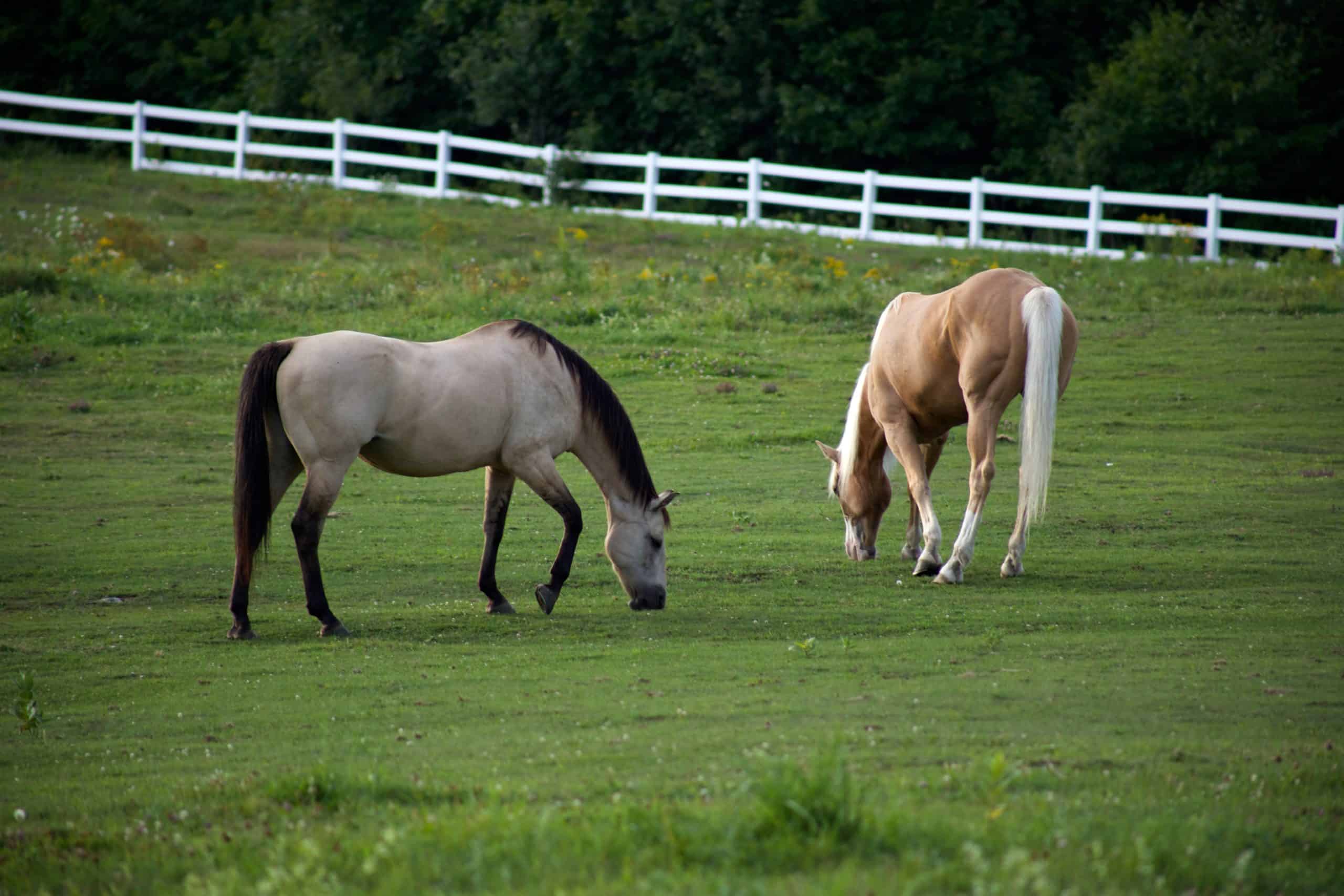
Photo by Free Nature Stock from Pexels

Key takeaways 

  • Supplement based on diet – Horses on an exclusive hay diet require additional Vitamin E 
  • Supplement based on conditions – Aging or underweight horses as well as horses with health conditions require additional Vitamin E. 
  • Keep an eye out for signs – When in doubt, a blood test can determine if there is a deficiency. 

To conclude, Vitamin E is an essential nutrient that may need to be supplemented based on your horse’s diet, age, underlying conditions, and work.  

Hungry for more? Here is the second post of the series: Equine Nutrition: Selenium.