
Posted on

Equestrians: Horse management apps

With more and more apps designed to help equestrians manage their horse, especially barn owners with many charges, it is hard to choose the right one. Here is a list of the top horse management apps for 2020 on Android and Apple. You are sure to find an app for you.

If you are looking for a list of exercise tracking apps for equestrians, here’s the list!


the EquestrianApp

Equestrian App

The Equestrian App is designed for horse owners and horse business operators, including barn owners, bodyworkers, farriers, and equine dentists. For barns, it includes barn chat to allow boarders and horse owners to discuss and chat. For horse owners, it keeps track of your horse’s appointments so you can stop asking yourself “When was the last time the farrier was out?” 

I was able to test this application extensively thanks Patrick from the Equestrian App, who gave me temporary access to all the Gold features. It was a good experience; however, I never really understood how to share a horse and I wasn’t able to find a FAQ at the time. Their customer support has since improved and my understanding is that the app is getting better and has more options with every iteration. I encourage you to try this app out if you want an all around companion in your phone for all your barn and horse needs.


Available for Apple and Android. Accessible online from a computer.

The basic options are free.

If you want to add Barn Chat, Photo gallery, printing and To-Do’s, it is $2.95/month or $24.95/year for the Silver membership.

$4.95/month or $49.95/year for the Gold membership, you get unlimited horses, file upload, ride tracking, Show and award tracking and business profile enhancements. 


Equitracker

EquiTracker helps you track all aspects of horse care including farrier, deworming and vaccinations. It does have ads though. If you want to remove them, it is a one-time fee of $2.99. 

Available for Android only. 


Horse Health Tracker

Horse Health Tracker was designed by Guelph University. It tracks the important metrics of your horse, such as body condition and body weight calculator. It also has a 5-minute health check assessment. 

The upgrade costs $4.59 to unlock reminders, graphs and videos for two horses. $6.99 for 10 horses and $9.99 for up to 50 horses.

Available on Apple and Android.


Equine organiser

Equine organiser allows you to track all aspects of your horse management on any device, including your computer. It even allows barn owners to organise their staff and service providers with to-do lists and you can also list your horses for sale. 

Available on Apple and Android.


The PonyApp

The Pony App allows you to organize and invoice your different services. It tracks the different horses you ride and keep everything in the same place. The premium version is $9.99/month or $99.99/year. 

Available only on Apple. 


HorseCare – Calendar, Diary

HorseCare is an app that allows you to keep track of all the appointments but also document your horse journey using a journal. It also has a built-in community to share your pictures and updates. The Premium version at $8.99/month or $32.99/year has a few extra features, notably a safety feature, a nutrition calculator and the ability to use it offline. 

Available only on Apple. 


Hooves

Hooves is a journaling app that allows you to share your horse’s information with other riders. You can manually track your training sessions as well. This one is great for those who want to keep things simple.

Available on Apple and Android. 

Conclusion

I hope you find an app that meets your needs in this list. If you have any questions, message me! If you are using another app to track your horse’s appointments and stuff, add it below. I would love to hear about it.
Related

Posted on

6 Important Trail Riding Safety Tips

I put together a list of trail riding safety tips after an unfortunate incident last year. I hope these tips help you avoid the situation we found ourselves in!

Incident

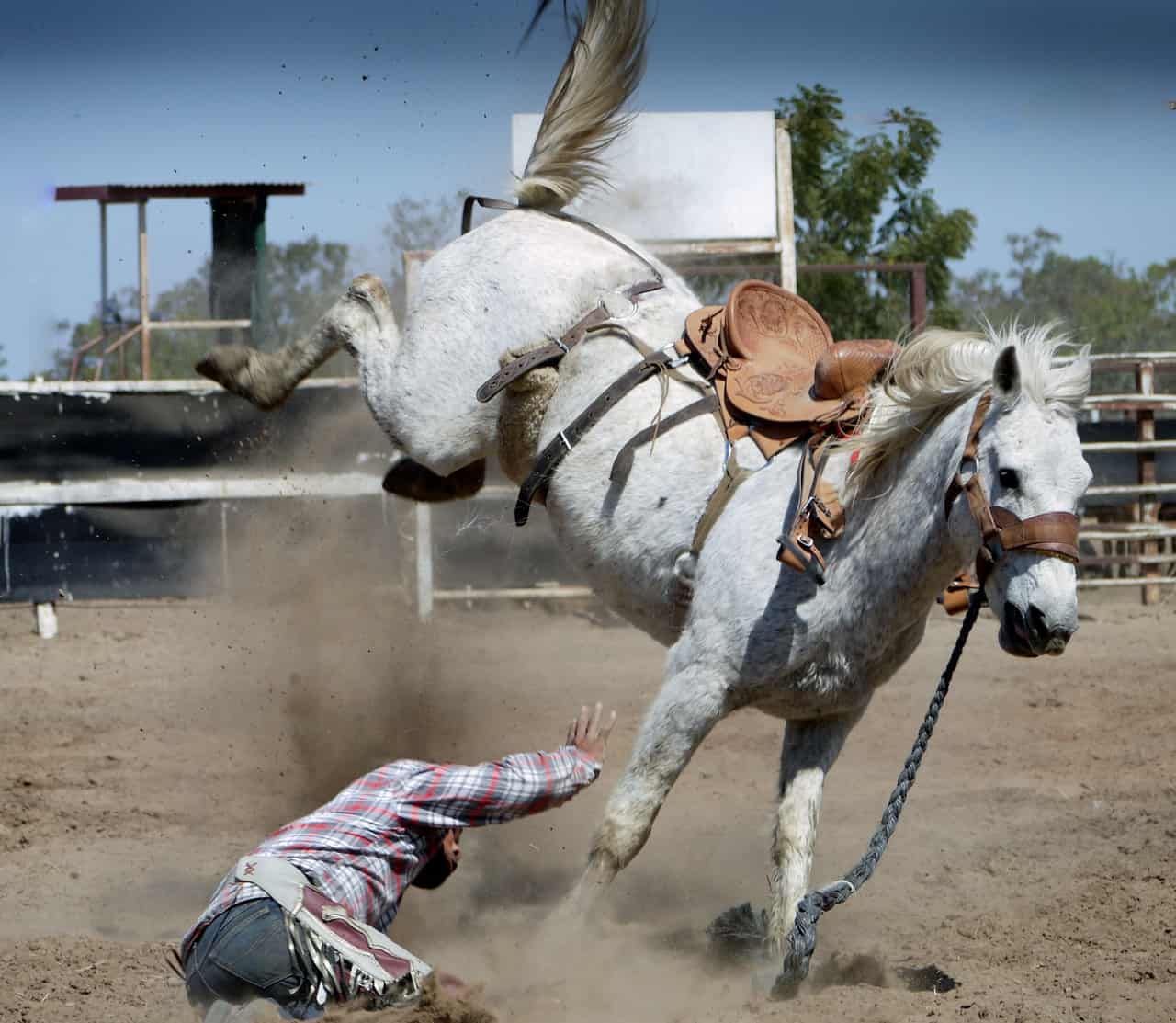
A friend and I were out on a trail ride in a lesser-known area of our trail network when her horse tripped and accidentally dumped her onto the ground. 

Once I managed to stop my horse and grab hers, I headed back to her. She was still on the ground and in obvious pain. She decided to walk it off a bit (like any good equestrian, right?), so we both took our horses and walked. As we moved further away from home, she realized that she was hurt worse than she had originally thought and made the decision to turn around and head home. If only she could get back onto her horse!

She managed to get back on thanks to a well-placed log, but it was a painful hour back to the barn. I insisted on accompanying her back to the barn and making sure she was in good hands before heading home.

She spent that evening in the hospital for x-rays and such and it took weeks for her to feel like herself again.

This incident led me to think about the key things to do to improve your safety while on the trails in case the unexpected happens.

1. Pack water and a snack

You never know how long you will actually be out on the trail. Packing water and a snack is the minimum to get by in most situations.

There are lightweight saddles bags out there that work for both English and Western Saddles.

Here are the saddlebags available here at Equestrian Next Door.

2. Bring your phone

It is a great thing to have when you need to call for backup. Even better when it’s charged. Make sure to program the local emergency numbers too. Sometimes it isn’t as simple as 911!

3. Tell someone

Tell them how long you think you’ll be out, the route you think you’ll take and any other details. Make sure this person is responsible enough to try to contact you if they haven’t heard from you and know what to do should that happen. Have a plan!

4. Dress appropriately

There are few things worse than freezing on your horse because you didn’t check the weather forecast. Check the local weather and bring what you need. The general rule of thumb that it is easier to remove layers than add some (especially if you forgot said layers back home) still holds true on horseback.

If you are trailering out to a trail ride, make sure to pack extra clothes for everything, including socks. You never know what may happen while you are out there.

Special note on winter riding: Be aware of frostbite and dress warmly. I love the heat packs for your feet and hands. Though I find the ones for your feet only last about 3 hours instead of the advertised 5. Also, this may sound obvious, but check the wind chill!

5. Use an app

There are more and more apps tailored to equestrians. Most of these also offer safety tracking. Here’s a pretty complete list of equestrian tracking apps. Personally, I use Equilab because it connects to my smartwatch.

6. Buddy up

Last but not least, buddy up when you can. It is more fun and at least you have someone else who can contact emergency services or administer first aid if needed.

Take away message

I hope you never need all these safety tips, but as they say, better safe than sorry! I certainly encountered a few situations last summer that made me wish I had taken the time to prepare and make it part of my riding routine.

Have you ever been in a sticky situation? What happened and what did you do? I would love to hear about your adventures in the comments below or join my Facebook group for Canadian Trail Riders to share your stories!


Posted on

How to clean your horse

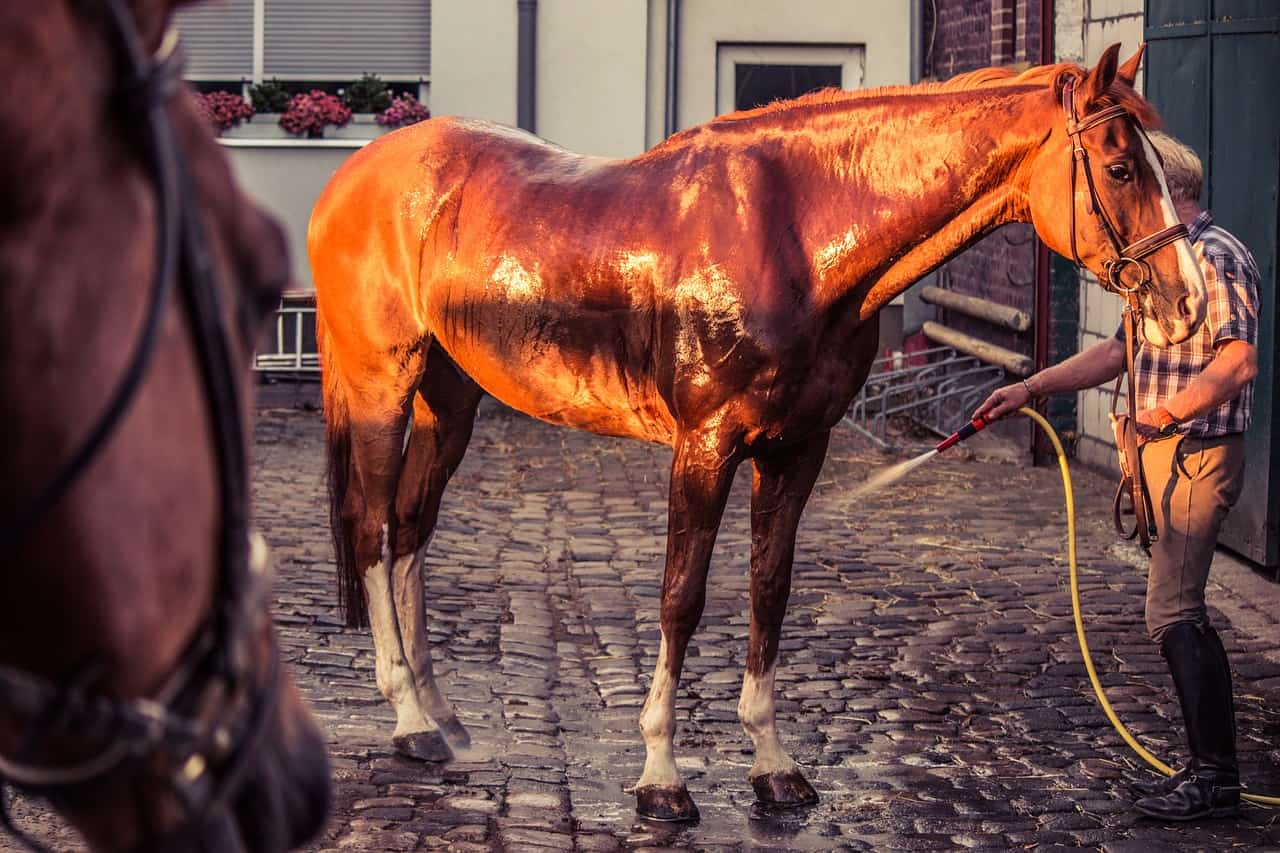
It is important to wash your horse properly to keep its coat healthy. It allows you to identify skin or other issues and helps you bond with your horse. Keep in mind while you are washing your horse to avoid standing in back of it as much as possible, especially while washing its tail.

What you’ll need to clean your horse:

Optional

How to wash your horse

  1. Make sure all the items you need are clean, especially your brushes.
  2. Choose a nice warm day, so that your horse won’t catch a chill.
  3. Find a spot with access to water and a place to secure your horse. Make sure to use a quick-release knot.
  4. Groom your horse before washing it, including the mane and tail.
  5. Use a sponge to gently clean your horse’s face. Do not use shampoo and clean in the direction of the hair. 
  6. Wet your horse. If you aren’t sure of how your horse is going to react, start with the hooves and move your way up. Your horse may prefer a sponge instead of the spray from the hose. Take the time to figure this part out and get your horse comfortable with either option.
  7. Clean your horse’s genitals. Use a clean sponge and gently wipe and clean your horse’s anus and genitals. Remove any stuck-on debris with a sheath cleaner.
  8. Work the shampoo into your horse’s coat with a grooming glove or sponge. You may need to do this in sections to avoid leaving the shampoo dry on your horse’s fur. This will dry it out. 
  9. Rinse the horse either with a clean sponge or hose until the water runs clear and there is no shampoo left. 
  10. Scrap off the water from your horse and use towels to dry it off. Walk it in the sun for 10 minutes or, if it is cloudy, use a cooler. 
  11. Comb your horse’s mane with your fingers first and then the comb and use a detangler as needed. 
  12. Wash your horse’s tail in a bucket with shampoo. Swish the tail around in the bucket. Use a sponge to clean the dock and the top of the tail. Rinse until the water runs clean and there’s no shampoo left.

How often should you clean your horse

It is possible to wash your horse too often. If your horse lives mostly outside, washing your horse once a month is enough. If you need to wash your horse more often due to shows, consider stabling as washing too often will strip your horse’s coat from its natural defences against the weather.

Enjoy the grooming time!

Ready to wash? Check out our grooming products!

Posted on

Riders: How to go bitless safely

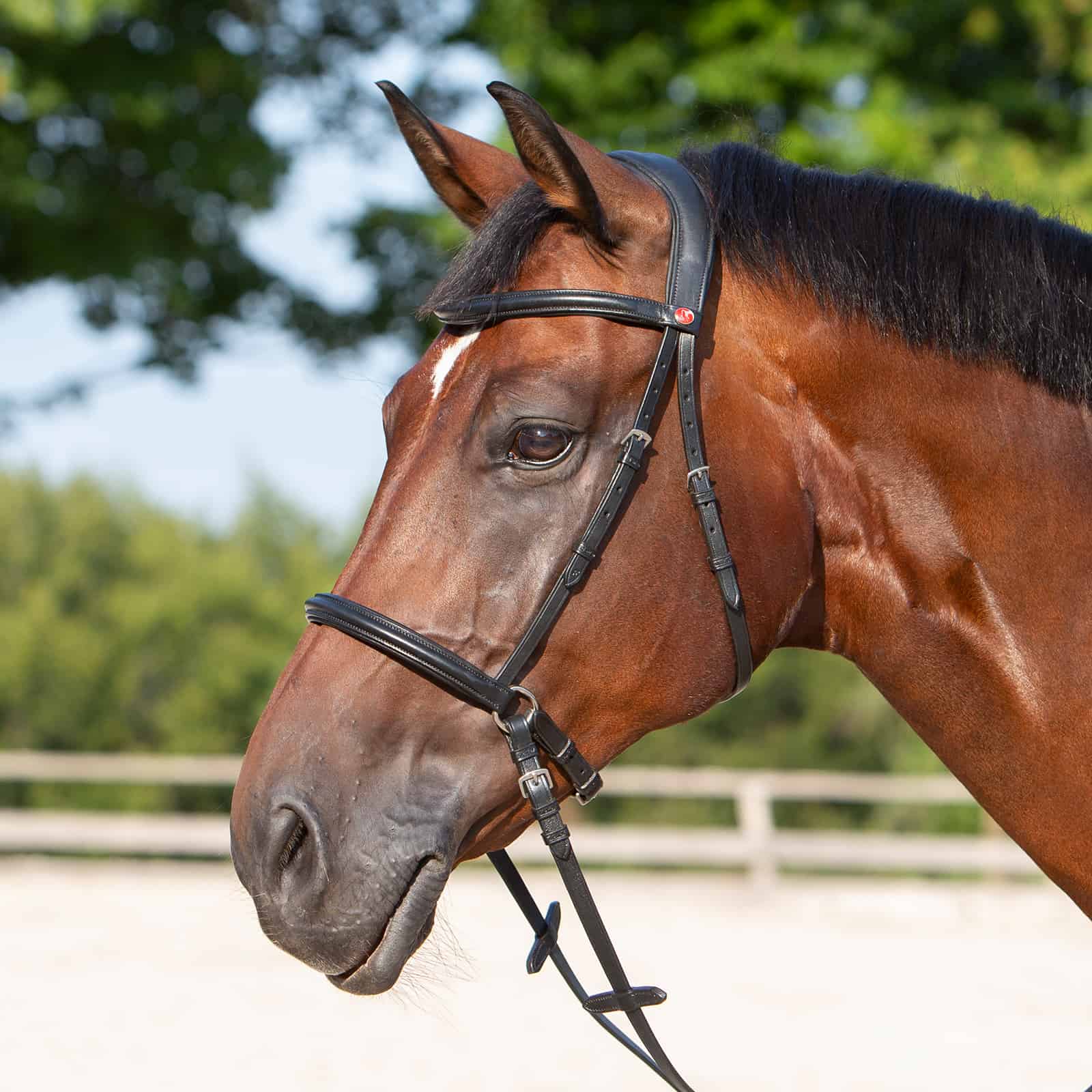
Kieffer Kendra bitless bridle

Disclaimer: I’d like to caution this post by saying that not all horses can smoothly go bitless, just like not all horses do well with a bit. It can take time, patience, and work to get you and your horse comfortable together with new gear. For me, going bitless with my sensitive mare was the best decision I could have made. Only you and your trainer can judge whether you and your horse are ready for that journey and if it is right for you. 

Another thing to keep in mind: Any bitless option, in the wrong hands, can be just as harsh as any bit. Don’t think that by going bitless you are necessarily less harsh if you don’t take the time to learn how to use it properly. 

Advantages of going bitless

  • More relaxed forward horse 
  • Improved riding with your seat and aids instead of your hands 
  • Better communication with your horse 
  • Great alternative if a horse has any problems with the bit, either physical or psychological 

Disadvantages of going bitless

  • Going bitless can be just as expensive as trying to find the right bit for your horse
  • There are inherent dangers in going bitless too quickly or with the wrong foundations

The following steps may take you weeks, months, or years to go through to get your horse to go bitless safely. Take your time and make sure that your horse is calm and connected to you every step of the way. Do not skip a step! Get help if you need it!

This list below is inspired by Caroline Rider’s YouTube video and other sources cited at the end of this blog post. I really loved how Caroline Rider explained how to go bitless. The foundations she teaches and the relaxation required are exactly in line with my own training principles. However, I strongly recommend wearing a helmet at all times when riding a horse and keep in mind that there are other bitless options than then ones she mentioned.  

How to train your horse to go bitless

  1. Find the right bitless option to start and fit it properly. 
    1. Key things to keep in mind, side-pulls, hackamore, cross-under and bosals, all act differently and are fitted differently. Here is a link on how to fit each one. 
  2. Start in a confined area – Round pen or riding ring 
    • Groundwork
      1. Put on the bitless bridle or solution you’ve chosen without reins and let your horse walk off without you. Notice any signs of discomfort. This is your first queue to know if your horse is comfortable with the bitless solution you chose. 
      2. Add the reins and walk your horse around from the ground. 
      3. Show your horse what if feels like when the reins are used to go left and right. Make sure your horse yields to the pressure in a relaxed manner.  
      4. Show your horse what pulling up to a stop looks like using the reins. 
  3. Check your foundations 
    1. Mounting block – Your horse should be calm and responsive. You should be able to mount without having to hold back your horse or worry about it walking off without you. If your horse does this with a bit, you may want to start there and then work it again with your bitless option.  
    2. Contact – At a walk, work your horse within the appropriate contact for your bitless option. You may need a lot less contact than you are used to, so take your time. Make sure to maintain your horse’s attention while checking whether you can move forward and stop within a relaxed and calm frame.  
    3. Flexions 
      • Vertical – Put tension on the reins and release as soon as your horse relaxes calmly. 
      • Lateral – Work left and right carefully. Make sure to release as soon as your horse relaxes.  
    4. Back up – Much the same as the flexions. Ensure that your horse is again calm and relaxed. 
    5. Disengage the hind end – This is like disengaging your horse’s engine. It will keep you safe and ensure that you have brakes. Caroline Rider shows very well how to do this in her video. It’s important to drill this training aid into your horse and yourself so that if you ever have to stop quickly, you have that option.  
    6. Increase the pace very gradually. Only once you are both 100% comfortable with a gait should you progress to the next. 
  4. Enjoy a relaxing trail ride with your horse! Keep it short a few times without too much excitement.

Conclusion

In short, as much as I love bitless, it isn’t for everyone. Make sure to transition to bitless slowly and carefully to ensure your safety and your horse’s calm and relaxed connection to you. Most of all, enjoy it! 

Sources:  

Ready to go bitless?

Related Reading